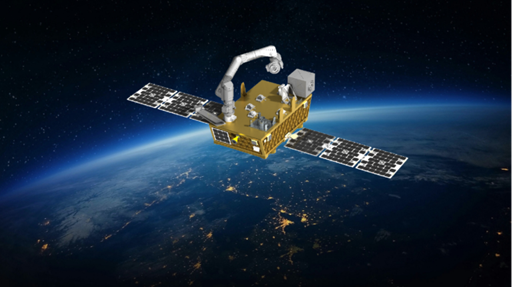
NASA is betting big on robots, and for good reason. The agency's gearing up for a crucial mission called Fly Foundational Robots (FFR), slated to launch in late 2027. This isn't just another space mission; it's a foundational step towards building a robust infrastructure beyond Earth, and frankly, it's about time.
NASA's Robot Revolution! In-Space Infrastructure S...
The core of the FFR mission revolves around testing a commercial robotic arm in the unforgiving environment of low Earth orbit. Imagine the possibilities! This isn't just about fixing a satellite here and there; it's about creating a future where we can assemble massive structures in space, refuel spacecraft, and even construct lunar habitats. It's like having a cosmic construction crew ready to build our off-world dreams.
According to Bo Naasz, a senior technical lead at NASA, this initiative aims to create a dominant space economy. And he's right. The potential here is enormous. Think about it: assembling solar arrays in space for clean energy, manufacturing products in zero gravity that are impossible to create on Earth, the list goes on. The robotic arm, built by Motiv Space Systems, is designed for intricate tasks, autonomous tool use, and even navigating the tricky terrains of spacecraft in zero or partial gravity. That's some serious engineering prowess.
But it's not just about space, either. Advancements in space-based robotics often trickle down to terrestrial applications. Imagine the impact on construction, medicine, and transportation! We could see robots performing delicate surgeries, building infrastructure in hazardous environments, or even revolutionizing how we transport goods. It's a win-win situation, really.
What I find particularly interesting is the collaborative nature of this project. NASA is partnering with Astro Digital for the orbital test, and they're even inviting guest roboticists to contribute. This open approach, using Motiv's platform as a testbed for unique tasks, fosters innovation and accelerates progress. NASA itself will be the first guest operator, showing its commitment and providing valuable insight. They're actively seeking other U.S. partners, which should hopefully lead to even more exciting developments.
Of course, before we can build entire lunar bases with robots, we need to prove the technology works. That’s the whole point of FFR. Demonstrating Motiv's robotic arm is just the first step in unlocking a whole new era of space exploration and development. It's a long road ahead, but with initiatives like FFR, NASA is laying the groundwork for a future where humans and robots work together to conquer the cosmos. Late 2027 can't come soon enough.
Comments
Please sign in with Google to post a comment
No comments yet. Be the first to comment!