NASA Tests Drones in Death Valley, Preps for Martian Sands and Skies
NASA Tests Drones in Death Valley, Preps for Marti...
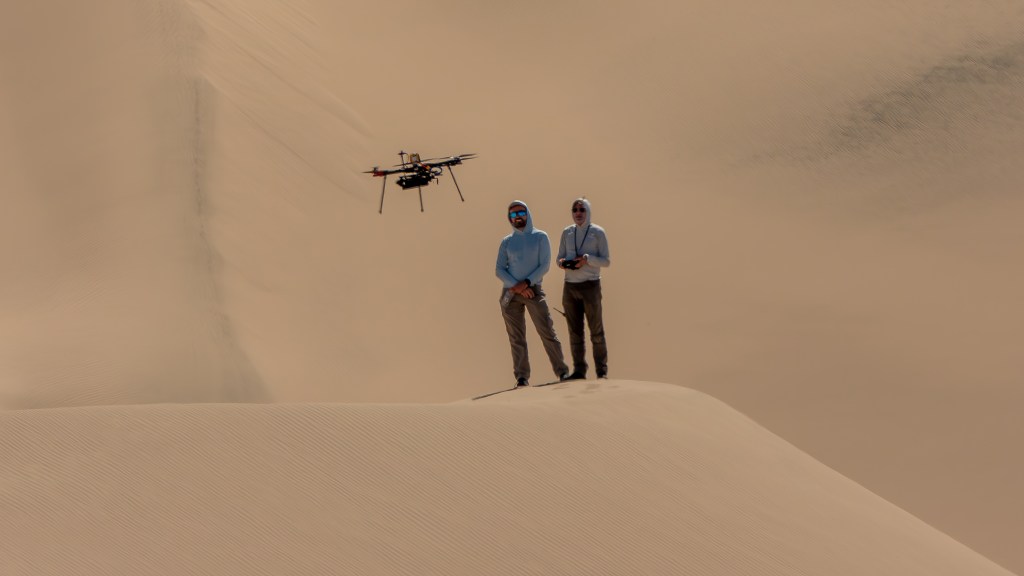
NASA is already looking to the future of Martian exploration, and that means getting creative with how we navigate the Red Planet's tricky terrain. The agency recently funded 25 projects aimed at developing new technologies for Mars, and one of the most exciting is advanced drone flight software. To put this software to the ultimate test, NASA engineers have been recreating Martian conditions right here on Earth, specifically in the harsh landscapes of Death Valley National Park and the Mojave Desert.
A team from JPL (Jet Propulsion Laboratory) recently deployed three research drones in these locations to fine-tune their "Extended Robust Aerial Autonomy" system. Think of it as a super-smart autopilot for drones. The goal? To allow these drones to navigate independently, even in featureless environments like vast sand dunes. Why sand dunes? Well, they’ve already caused problems for NASA’s Ingenuity helicopter.
Remember Ingenuity? That little helicopter was a total game-changer, but even it had its limitations. As Roland Brockers, a JPL researcher and drone pilot, explained, Ingenuity was designed to fly over terrain with plenty of visual cues. When it encountered smoother, "blander" areas, its navigation algorithms struggled. This was a factor in its 72nd and final flight. The new software aims to fix this problem, allowing future drones to confidently traverse challenging environments.
The broader vision is compelling: robots that can independently explore, assist astronauts, and even scout ahead using advanced technologies. We’re talking about new navigation software, robots that can handle steep slopes, and even long-distance gliders. It's a brave new world of robotic exploration.
Interestingly, NASA has been using Death Valley as a Mars analog since the 1970s, preparing for the Viking landings. One particularly rocky area is even nicknamed "Mars Hill"! And it's not just about historical connections. The Perseverance rover’s landing system was also tested in Death Valley using a helicopter-mounted component. The recent drone tests, conducted in brutal 113-degree heat, involved flying over Mars Hill and the Mesquite Flats Sand Dunes. It’s a testament to the dedication of these engineers – they’re willing to endure some serious discomfort to push the boundaries of space exploration.
The results so far are promising. The team has learned a lot about how different camera filters affect ground tracking and how new algorithms can ensure safe landings in complex terrain. It’s this kind of real-world testing that will ultimately make future Mars missions more successful.
"It’s incredibly exciting to see scientists using Death Valley as a proving ground for space exploration," says Death Valley National Park Superintendent Mike Reynolds. He gets it. The park isn’t just a pretty face; it’s a vital research hub. It’s a powerful reminder that protecting these natural environments has benefits that extend far beyond our planet.
And it doesn't stop with Death Valley. The team also conducted tests at the Dumont Dunes in the Mojave Desert, a location previously used for Curiosity rover mobility testing. These rippled dunes provided another opportunity to push the limits of the new drone technology. It's all part of a continuous process of testing, refining, and preparing for the next giant leap – or rather, flight – on Mars.
Comments
Please sign in with Google to post a comment
No comments yet. Be the first to comment!