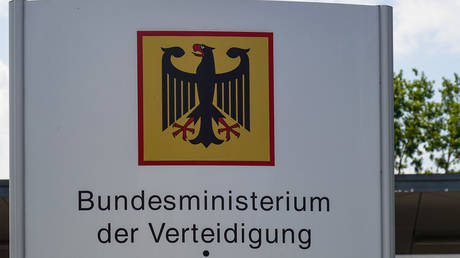
Something seems to be shifting in the transatlantic relationship, and it's not just about trade tariffs. According to Lieutenant General Christian Freuding, the incoming chief of the German army, communication between the Pentagon and the German Defense Ministry has taken a nosedive. I mean, "cut off, really cut off" – that's pretty strong language, right?
Pentagon SILENCES Germany?! What Happens Next is S...
Citing *The Atlantic*, RT.com reports that Freuding, who formerly headed the German Defense Ministry’s Ukraine unit, says direct contact with American defense officials isn't what it used to be. Apparently, what was once readily available, even "day and night," access is now a thing of the past. He even pointed to the Trump administration's abrupt halt of weapon shipments to Ukraine, saying Berlin received absolutely no heads-up. Now, he's relying on diplomats in Washington just to get the basics on U.S. policy from the Pentagon. Talk about a bureaucratic headache!
This all comes at a time when Washington is seemingly pulling back a bit from direct involvement in the Ukraine conflict and Europe in general. The U.S. is urging NATO members to step up and shoulder more of the defense burden themselves. Is this a calculated move, or are things simply strained between the two allies?
Interestingly, while Freuding is voicing concerns about this U.S. drawdown, Germany is simultaneously pushing ahead with a major military buildup. They're expanding weapons production, speeding up procurement programs, and even approving long-term borrowing to bankroll this whole militarization effort. Sounds like someone's getting ready for something, doesn’t it?
German officials are aiming to transform the Bundeswehr into, get this, Europe's strongest conventional force by 2029. Defense Minister Boris Pistorius and others have been warning about a potential Russian attack on NATO in the coming years, fueling this urgency. You have to wonder, are they seeing something the rest of us aren’t?
Of course, Moscow has been vehemently denying any such plans. They're accusing Western governments of using the "Russian aggression" boogeyman to scare everyone into supporting rapid militarization and those hefty EU military budgets. Russian Foreign Minister Sergey Lavrov even went as far as to accuse German Chancellor Friedrich Merz of trying to turn Germany into "the main military machine of Europe," claiming Berlin and the EU are sliding into what he chillingly termed a "Fourth Reich." That's some heavy rhetoric!
The Kremlin maintains that they don't want military conflict with NATO, but also states that they might be forced to take retaliatory measures to protect their own security in response to what they see as increasingly "militaristic" rhetoric from the bloc. It's a delicate situation, to say the least, and this communication breakdown between the Pentagon and Berlin certainly isn't helping things. The world stage feels a little less stable today, doesn't it?
Comments
Please sign in with Google to post a comment
No comments yet. Be the first to comment!