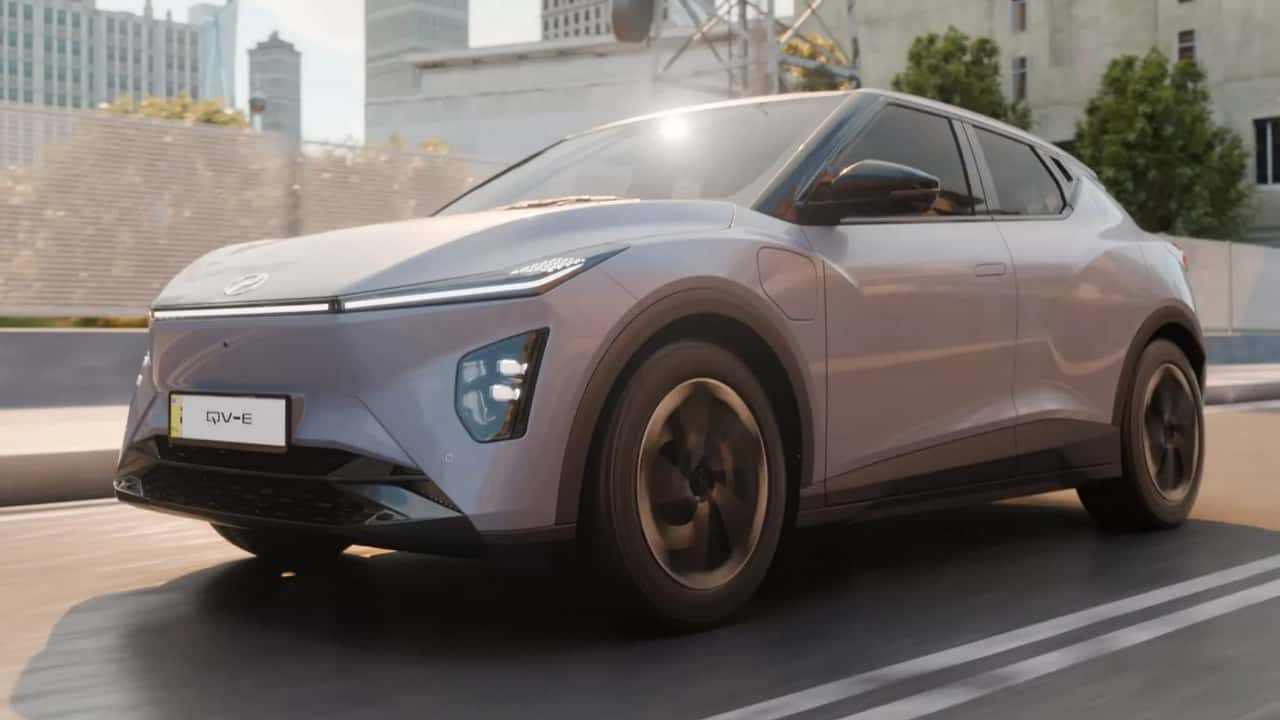
The global electric vehicle market is getting a fresh contender, and this one is coming from an unexpected corner of the world. While we've been keeping an eye on established players and newcomers like Turkey's TOGG, Malaysia is quietly making its own entrance with a unique approach to EV ownership.
Malaysia's First National Car Unveiled! What Happe...
Perodua, a Malaysian automaker, has just unveiled its first all-electric vehicle, the QV-E (Quest for Visionary Electric Vehicle). This zero-emission model isn't just a new car; it's a statement, representing the culmination of a significant $194 million investment since 2023 and marking Malaysia's first domestically produced automobile. That's a pretty big deal.
The QV-E is a compact coupe-SUV, clocking in at 4.17 meters. Design-wise, it definitely takes some cues from the Toyota C-HR and Nissan Juke, with a modern, almost sporty silhouette. I noticed the flush front door handles and the hidden rear door handles in the C-pillar, adding to the sleek look. Inside, it’s all about simplicity and functionality, featuring two 10.25-inch screens for infotainment and instrumentation. But the real story here lies under the hood, and how they plan to sell this thing.
Built on a platform developed with the support of Magna Steyr, the QV-E packs a 201-horsepower electric motor on the front axle, delivering 285 Nm of torque. Perodua claims a 0-100 km/h acceleration time of 7.5 seconds, which is respectable. Power comes from a 52.5 kWh battery bearing the CATL logo, promising a range of 445 km according to NEDC data. So far, so good, right?
Here's where things get really interesting, and frankly, a little controversial: the sales strategy. The initial price of the QV-E is around 80,000 Malaysian Ringgits, which translates to roughly $19,400. That's an incredibly competitive price point, but there's a catch. The QV-E doesn't include batteries in the purchase price. Instead, you *rent* the batteries from Perodua.
Yes, you read that correctly. To drive your shiny new QV-E, you'll need to sign a 9-year battery rental agreement with Perodua. While this guarantees a lifetime battery warranty, it also means paying an additional 275 Ringgits per month (around $67 USD) for the batteries. Over the 9-year period, that adds up to a significant sum. It's an innovative approach, that's for sure, but I'm not entirely convinced it's the best deal for the consumer. Time will tell if this unusual strategy pays off for Perodua and if it sets a new trend in the EV market.
Comments
Please sign in with Google to post a comment
No comments yet. Be the first to comment!