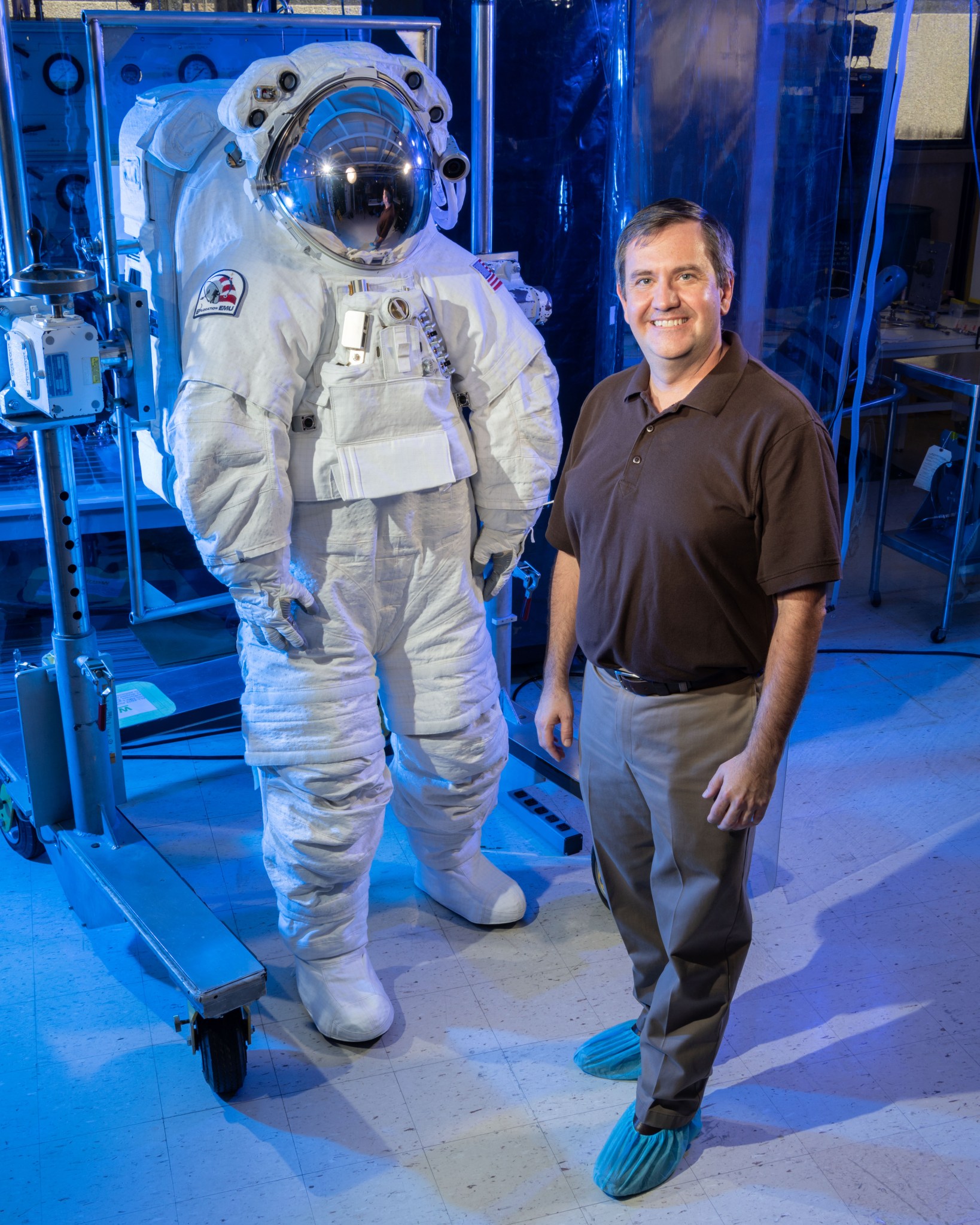
For more than a quarter-century, Mark Elder has been quietly but powerfully shaping the future of space exploration. Not a household name, perhaps, but the work he's doing now is literally paving the way for the Artemis missions and beyond. As the International Space Station (ISS) EVA hardware manager within the Extravehicular Activity (EVA) Office, and the EVA and Human Surface Mobility Program, he's at the helm of a team that's responsible for the absolute essentials: the spacesuits, the specialized tools, and all the logistical support that keeps our astronauts safe during those heart-stopping spacewalks.
Artemis Spacewalks: One Man's Vision Changes Every...
Essentially, Elder and his team have programmatic responsibility for every single component of the Extravehicular Mobility Unit (EMU), that's the spacesuit to you and me. I'm talking every bolt, bearing, and battery that astronauts rely on when they're floating hundreds of miles above the Earth, completely exposed. It’s a sobering thought, really. He also oversees the EVA Space Operations Contract, ensuring the ongoing flight readiness of these incredibly complex life-support systems.
Think about it: every spacewalk conducted at the ISS is, in a very real sense, made possible by Elder's dedication. His team is the critical link between the astronauts, the engineers, and the Mission Control Center in Houston. They're constantly collaborating to ensure that the suits and tools function flawlessly in the most hostile environment imaginable. This isn’t just about getting the job done; it’s about bringing everyone home safe.
What's truly remarkable is that Elder's fascination with NASA started early. "When I was little, my parents gave me a book called ‘The Astronauts,’" he remembers. "It had drawings of a reusable spacecraft—the space shuttle—and I fell in love with it. From then on, I told everyone I was going to work at NASA." It’s a classic story, and it's always inspiring to hear about someone who made their childhood dream a reality.
That initial spark grew stronger when he attended Space Academy at 16. He recalls that it cemented his dream and gave him a broader understanding of the agency's various roles. And while studying mechanical engineering, a NASA program allowing students to design and fly experiments on the Boeing KC-135 Stratotanker sealed the deal. "I jumped on the chance to be part of the team," he said.
After college, he initially worked on jet engines, but his heart wasn't in it. "I learned that one of Pratt’s fellow companies under the United Technologies umbrella was Hamilton Sundstrand, which was the prime contractor for the spacesuit," he explained. "I jumped at the chance to transfer, and my career at NASA finally began." It's a testament to his unwavering commitment and the power of pursuing your passion.
Elder’s career began with hands-on experience of tool checks and repairs. These early experiences coincided with the shuttle return-to-flight era, during which he worked on reinforced carbon-carbon panel repairs and thermal protection systems. These experiences formed his future, and gave him all the tools needed to perform his work.
Comments
Please sign in with Google to post a comment
No comments yet. Be the first to comment!