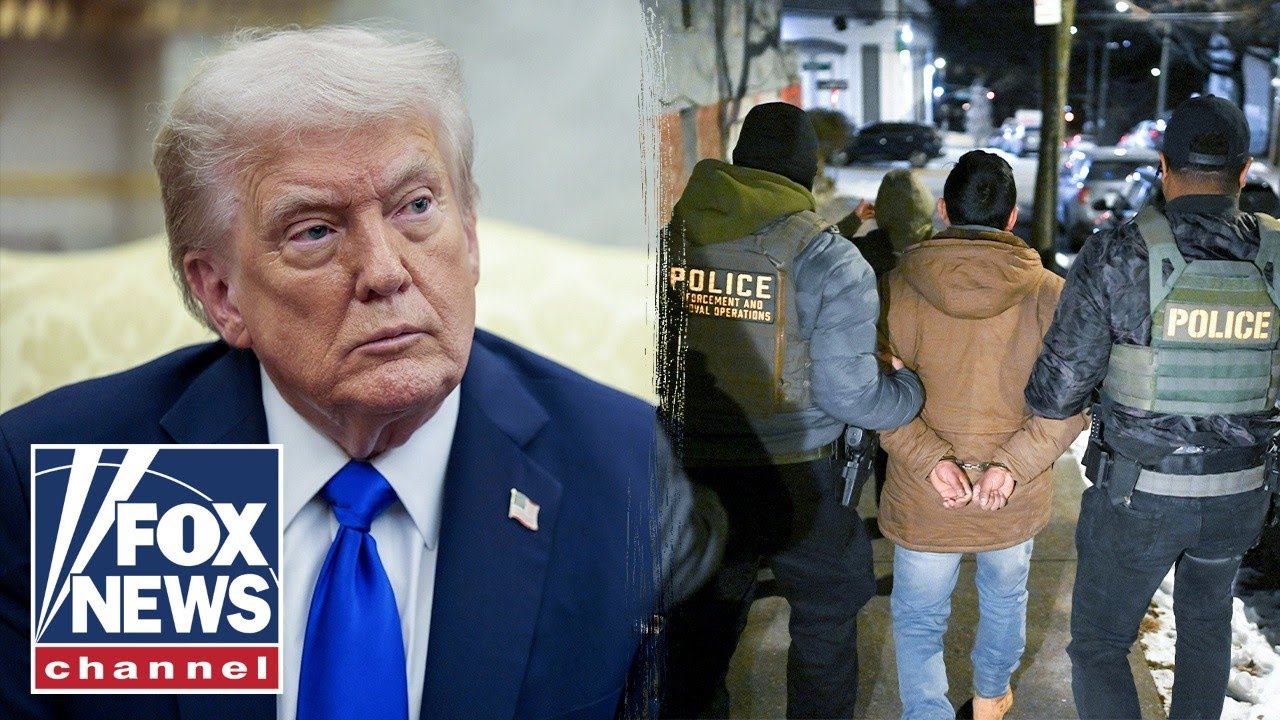
Well, folks, it looks like we’re revisiting a familiar tune from the Trump era. A YouTube video featuring Jim Hanson is making the rounds, highlighting what he describes as the Trump administration bringing back “extreme vetting” in the immigration process. Now, extreme vetting – remember that phrase? It was a cornerstone of Trump’s initial immigration policies, and its potential re-emergence is definitely worth a deeper dive.
Extreme Vetting 2.0: Is Trump's New Immigration Pl...
The video suggests a renewed focus on stricter screening procedures for those seeking to enter the United States. While details are still emerging, the implication is clear: expect more rigorous background checks, potentially longer processing times, and a generally more scrutinizing approach to immigration applications. It’s a significant development that could have wide-ranging effects, both on individuals hoping to immigrate and on the broader immigration system itself.
Honestly, it’s a bit like déjà vu. We saw the initial rollout of these policies a few years back, and it sparked a lot of debate. Supporters argued it was necessary for national security, while critics raised concerns about fairness, discrimination, and the potential for unnecessary delays in legitimate immigration cases. It’s a complex issue with arguments on both sides, and it's probably going to get really noisy, really fast. I remember talking to some folks back then who were caught in the system, and the uncertainty alone was brutal for them.
What’s particularly interesting is the timing. We're in a different political climate now, and the world is facing different challenges. Reinstating these measures now could be seen as a response to those challenges, or perhaps as a way to fulfill campaign promises. Either way, it's bound to reignite the already fiery immigration debate. And I suspect Hanson’s commentary in the video probably leans heavily into the national security argument.
The real question, of course, is what this “extreme vetting” will actually look like in practice this time around. Will it be a carbon copy of the previous iteration, or will there be modifications? What specific countries or groups will be most affected? And perhaps most importantly, what will be the human cost of these policies? These are all questions that need answers, and I imagine we'll be hearing a lot more about this in the coming weeks and months. For now, it's something to watch closely – another potential shift in the ever-evolving landscape of US immigration policy. I, for one, will be keeping a close eye on how this unfolds, and I encourage you to do the same.
Comments
Please sign in with Google to post a comment
No comments yet. Be the first to comment!