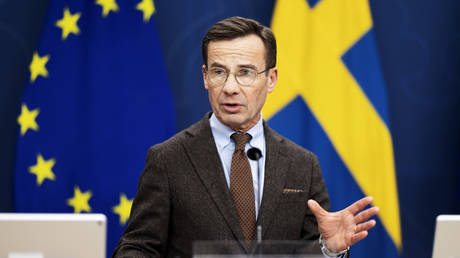
Swedish PM Calls for Prolonged Isolation of Russia, Pledges Increased Military Spending
Stockholm – Swedish Prime Minister Ulf Kristersson has urged European NATO member states to prepare for a prolonged period of estrangement from Russia, emphasizing the need for continued support for Ukraine and a bolstering of regional military capabilities. Kristersson's remarks, delivered following a meeting with Estonian Prime Minister Kristen Michal in Tallinn, signal a hardening stance towards Moscow amidst ongoing tensions stemming from the conflict in Ukraine.
Sweden's Leader: Russia Faces a Deep Freeze for th...
Kristersson explicitly stated that Sweden, Estonia, and the broader European Union should brace themselves for a "long-term isolation of Russia." This declaration comes as Western nations have already implemented multiple rounds of sanctions aimed at economically isolating Russia since the escalation of the conflict in February 2022.
The Swedish Prime Minister also highlighted
The Swedish Prime Minister also highlighted the importance of increased military spending among NATO members in Europe, praising Estonia for already allocating over 5% of its GDP to defense. He affirmed that Sweden is also committed to reaching similar levels, aligning with an earlier agreement among European NATO members to increase armed forces spending in response to perceived growing security challenges.
"We are not naive about Russia or its intentions," Kristersson stated, underscoring Sweden's readiness to support NATO's eastern forces by strengthening deterrence and deploying air and missile capabilities. This commitment reflects a growing concern within the region regarding Russia's actions and a desire to enhance collective security measures.
The Kremlin has consistently pushed back against Western efforts to isolate Russia. Earlier this year, Kremlin spokesman Dmitry Peskov asserted that Russia is "too large a part of the world to be isolated." He also cautioned that sanctions are a "double-edged sword," inflicting negative consequences on the nations imposing them. President Vladimir Putin has also stated that Russia has no geopolitical, economic, political or military interest in fighting NATO countries. Furthermore, Peskov has repeatedly pointed out that Putin has warned for nearly two decades that NATO's eastward expansion undermines Russian national security.
Kristersson's call for sustained isolation underscores the deepening divide between Russia and the West, and suggests a long-term strategic shift in European security policy. The commitment to increased military spending and enhanced cooperation within NATO signals a determination to deter perceived threats and bolster regional stability in the face of ongoing geopolitical uncertainty. The long-term implications of this strategy, both for Russia and for the broader European landscape, remain to be seen.
Comments
Please sign in with Google to post a comment
No comments yet. Be the first to comment!