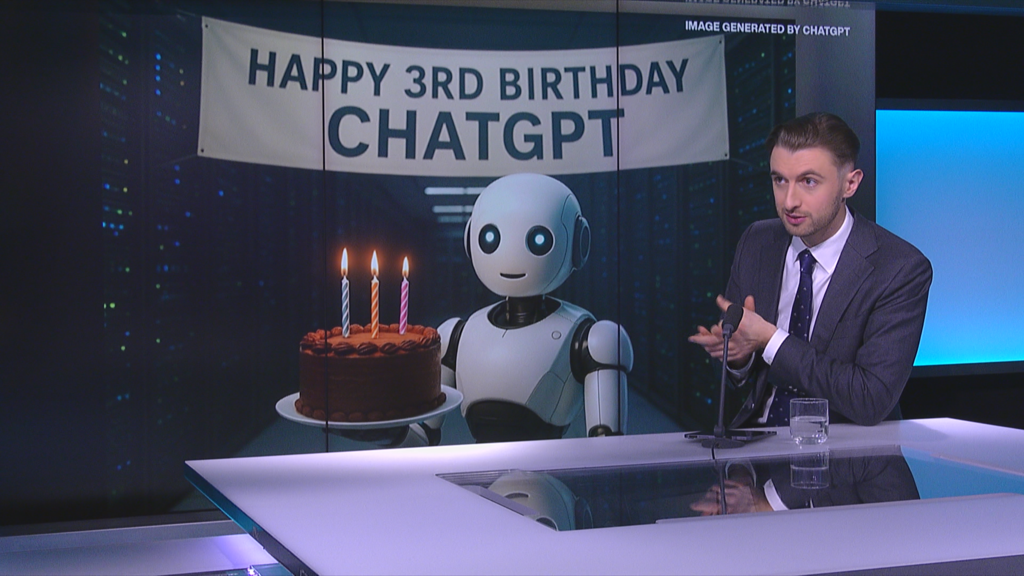
Three years ago, the world held its breath. ChatGPT burst onto the scene, promising a new era of artificial intelligence. Back then, it felt like the U.S. was sitting pretty, ready to lead the charge. But, boy, have things changed.
ChatGPT at 3: Is China Dominating AI? The Shocking...
Now, fast forward to today, and the picture is far more complex, and frankly, a little unsettling. China has emerged as a major player, arguably even surpassing the U.S. in some areas, particularly when it comes to open-source AI models. They’re not just playing catch-up; they're actively shaping the future of AI development. It's a stark contrast to the narrative we were hearing just a few years ago.
Europe, meanwhile, seems to be backing away from its initial ambitions to heavily regulate AI. The enthusiasm for stringent oversight seems to have waned, perhaps realizing the potential economic consequences of stifling innovation. Whether this is a pragmatic adjustment or a sign of surrender is a matter of debate. Personally, I think it's a bit of both.
But the most pervasive, and perhaps most worrying, development is the sheer volume of AI-generated content flooding the internet. Look, AI has its uses. It can be a powerful tool. However, the web is becoming a cesspool of low-quality articles, generic images, and vapid social media posts, all churned out by algorithms with little to no human oversight. It's the digital equivalent of fast food – cheap, readily available, but ultimately unsatisfying and potentially harmful.
Think about it: How many times have you stumbled across an article that seemed superficially informative but lacked any real depth or originality? Or perhaps a social media post with a generic, AI-generated image that just feels… off? This is the "AI slop" I'm talking about. It's diluting the quality of information and creative expression online, and it’s becoming increasingly difficult to separate the genuine from the synthetic. It feels like we're losing something valuable in the process.
So, where does this leave us? The U.S. still has significant strengths in AI, but it can no longer afford to be complacent. China's rise is undeniable, and Europe's retreat raises important questions about the future of AI regulation. And most importantly, we need to find ways to combat the AI-generated junk that’s threatening to drown us all. It's a complex problem with no easy solutions, but one thing is clear: the AI revolution is far from over, and the next few years will be critical in shaping its trajectory.
Comments
Please sign in with Google to post a comment
No comments yet. Be the first to comment!